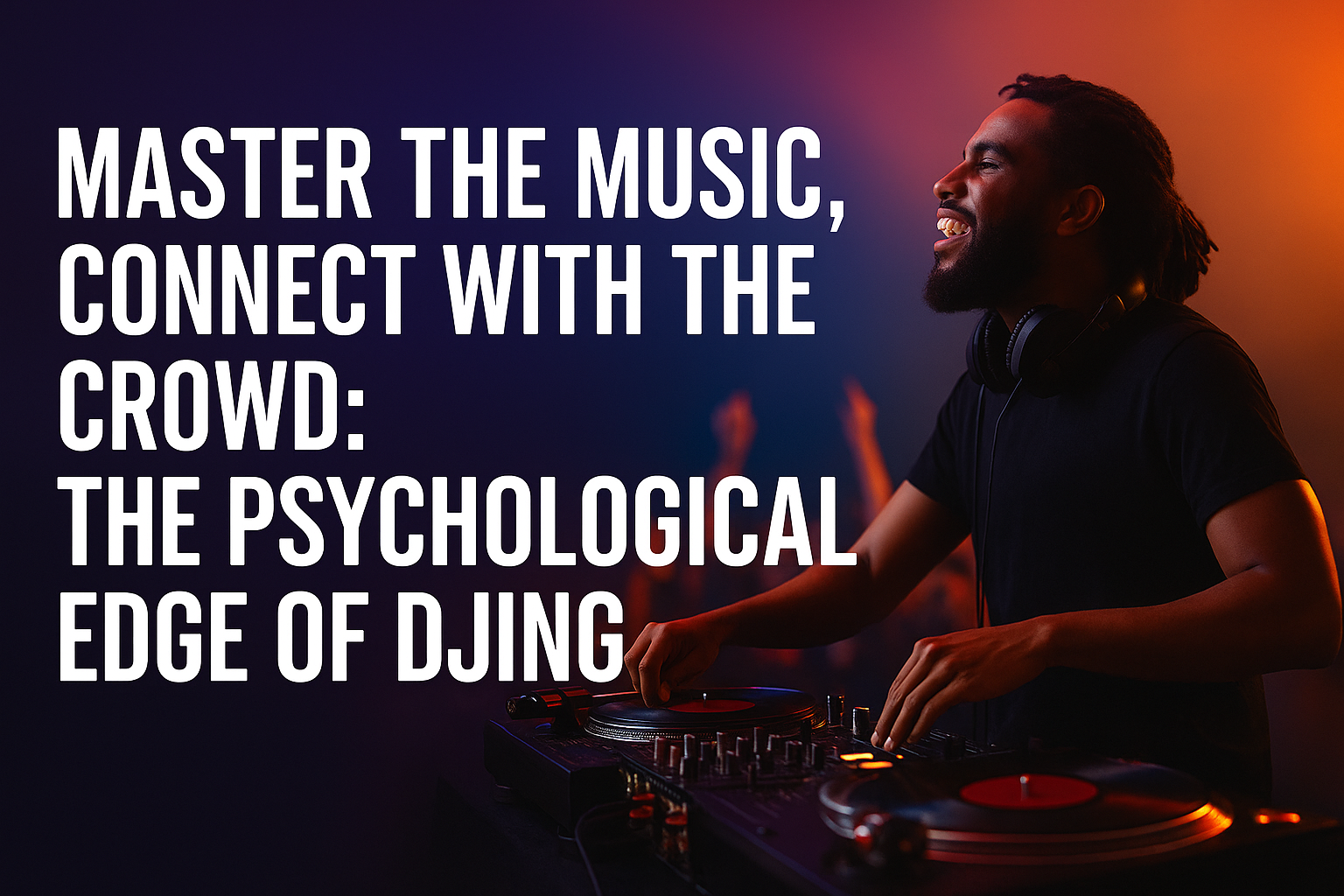
“Master the Music, Connect with the Crowd: The Psychological Edge of DJing”
Introduction: It’s More Than Music, It’s Mindset
For over 39 years, I’ve been behind the turntables, watching how people move, what makes them stay, and how a simple beat drop can shift the energy in the room. As a co-host of 2 DJs 1 Mic, and the creator behind DJMikeProduction.com and 2DJs1Mic.com, I’ve always believed that DJing is more than just playing tracks, it’s psychology in motion.
The psychology of DJing is the unseen force behind every unforgettable night. It’s what makes people throw their hands up, laugh with strangers, relive memories, or simply feel alive again. It’s the pulse of the party. And when you understand it, you don’t just DJ, you create experiences.
Understanding the Multi-Faceted Nature of People
At the heart of DJing lies one truth: people are complex.
What someone wants to hear at 7 PM is rarely what they’ll want at midnight. One night they vibe with Tupac; the next, it’s Van Halen. Their tastes shift with the crowd, the lighting, their mood, their memories. This is why DJs can’t rely solely on playlists, they must read people. Constantly.
Versatility is no longer a skill, it’s a requirement. Because music moves people, but psychology keeps them moving.
The Art of Reading the Room
The phrase "reading the room" gets thrown around often, but as DJs, we live it. It’s not just about watching for who’s dancing, it's about reading energy, emotion, posture, facial expressions, conversations.
You're decoding unspoken language every second.
This requires empathy, intuition, and anticipation. It’s less about asking, “What song should I play?” and more about, “What feeling should I create next?”
The Psychological Mechanics of DJing
Let’s break down the psychology of DJing into its most critical components:
1. Music Knowledge
Great DJs go beyond knowing songs, they understand their impact. They know what builds hype, what soothes, what stirs memories. A classic disco hit can resurrect the '70s for one crowd while igniting curiosity in another.
Knowing your music means knowing its emotional power.
2. Timing and Context
When you play a track matters as much as what you play. Play “Uptown Funk” too early and it falls flat. Play it when the energy’s peaking, and it’s explosive.
Timing is both technical and intuitive. It’s about knowing when to escalate and when to pull back. It’s rhythm, but it’s also restraint.
3. Audience Dynamics
Every crowd is a new organism. One may love throwbacks; another prefers underground beats. Watch body language. Are people moving toward the dance floor or away? Are their shoulders swaying or is the energy stiff?
Adaptation is survival in this business.
4. Emotional Response
Music triggers emotion faster than almost anything else. Your setlist should feel like a rollercoaster: joy, nostalgia, excitement, release.
As DJs, we don't just control the music. We curate the emotional journey.
Case Studies: DJ Psychology in Action
Example 1: The Wedding Reception
Goal: Build a joyful, heartfelt celebration.
Strategy:
Begin with romance: Ed Sheeran, John Legend, or timeless love songs.
Transition to feel-good tracks post-dinner, light pop or soft rock.
Peak the night with crowd-pleasers: Beyoncé, Bruno Mars, MJ.
Watch the couple, the family, the dance floor, adjust accordingly.
Honor special moments like the first dance with meaningful songs.
Example 2: The Nightclub
Goal: Keep the energy high and the floor packed.
Strategy:
Start strong: Think Dua Lipa’s “Levitating,” or The Weeknd’s “Blinding Lights.”
Mix remixes and mashups to maintain freshness.
Transition smoothly to keep rhythm alive, avoid dead air.
Use the mic strategically. Shoutouts, requests, make them feel seen.
When energy dips? Pull out a beloved anthem to reignite the vibe.
Example 3: The Corporate Event
Goal: Blend professionalism with relaxation.
Strategy:
Start with classy ambiance, jazz, acoustic covers, or smooth R&B.
Keep it safe but interesting: light pop, classic hits.
Maintain volume for conversation, raise it gradually if energy builds.
Stay polished. Keep announcements minimal and clean.
Be open to last-minute feedback, adapt quickly and gracefully.
Applying Psychological Principles
Building Connection
It’s not just what you play, but how you connect. Say their names. Take requests. Smile. People don’t just want a good night, they want to feel part of something.
Creating a Narrative
Your set should tell a story. Maybe it begins with nostalgia, then builds into hype, then resolves into reflective melodies. You’re not just playing songs, you’re guiding an emotional journey.
Managing Expectations and Surprises
Familiarity brings comfort. Surprise brings excitement. When you follow a crowd-pleaser with a creative remix, or a hidden gem, you wake people up. That’s power.
Triggering Memory and Nostalgia
That one track from prom? That first dance? That summer road trip? When you hit that sweet spot, people don’t just dance, they relive.
That’s the DJ’s magic.
Practical Tips for DJs: Before, During, and After the Gig
Pre-Event Preparation
Know Your Crowd: Age, location, culture, vibe.
Build Playlists: Have backups ready.
Test Your Gear: Never assume.
Understand the Room: Learn the acoustics. Adjust accordingly.
During the Event
Engage Early: Break the ice fast.
Stay Flexible: If a track isn’t landing, pivot.
Watch and Listen: Body language tells you everything.
Smooth Transitions: Keep the emotional current flowing.
After the Event
Ask for Feedback: From the client and the crowd.
Self-Evaluate: What went well? What could’ve hit harder?
Refine Playlists: Keep evolving.
Network: Every gig is a chance to book the next one.
Conclusion: DJing Is Psychology in Motion
DJing isn’t about the equipment, the trendiest tracks, or how many crates you have. It’s about connection. It’s about energy. It’s about understanding the psychology of the people in front of you and guiding them, emotionally, rhythmically, spiritually, through a journey they’ll never forget.
After nearly 40 years in this industry, I can say with confidence: the DJs who master the psychological side of their craft are the ones who last. They’re the ones who transform gigs into moments.
So next time you’re behind the decks, remember this: You’re not just spinning records. You’re shaping experiences.